
One breast care solution. Everything connected.
From invitation to screening, imaging, diagnosis, treatment and follow‑up - Pinga® runs the full breast care pathway on a single platform, so no participant, image or result ever gets lost between systems.
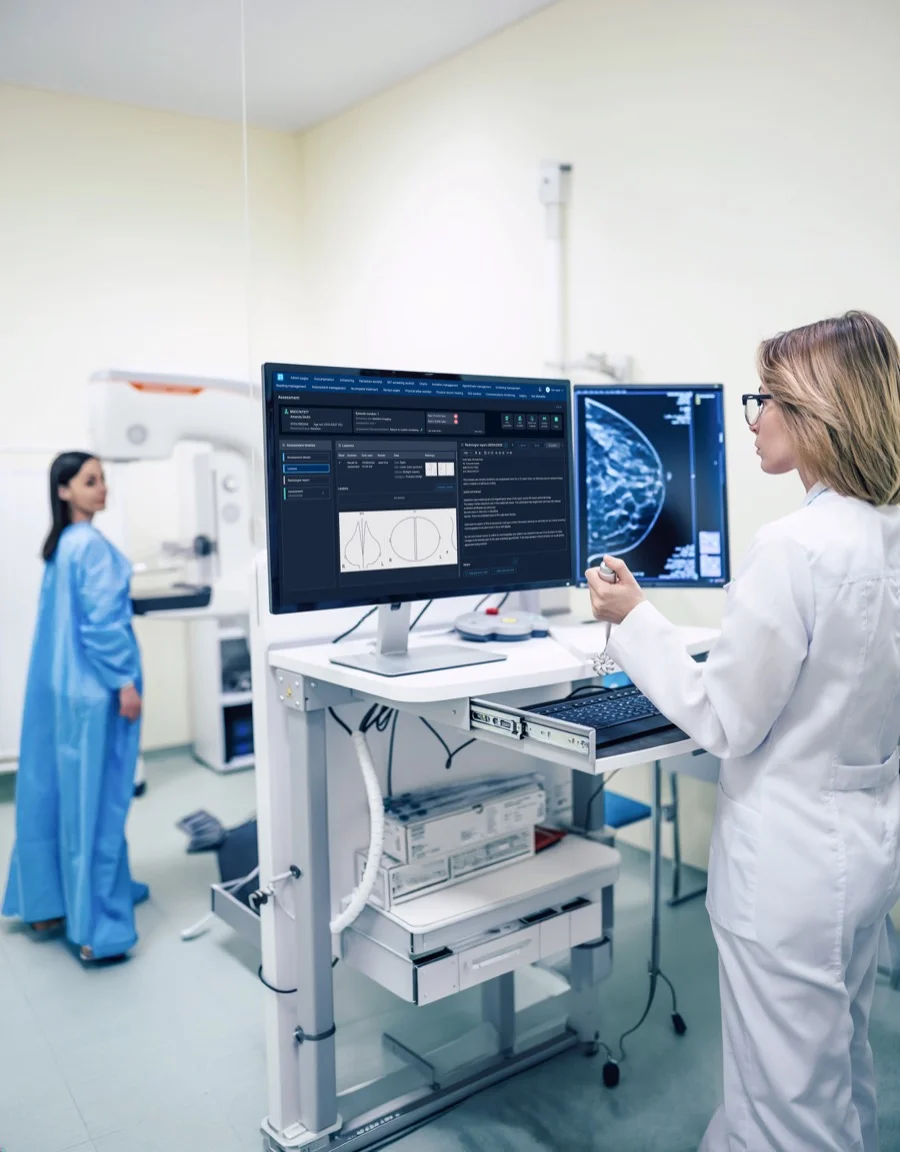
Breast care today runs on disconnected systems
A screening register, a RIS, a PACS, an MDT spreadsheet, a follow‑up tracker - most programmes stitch these together by hand. Every hand-off is a place a participant can be lost, and every re-typed result is a place an error can start.
Without Pinga®
With Pinga®
Every stage of breast care, in Pinga®
The same platform that manages a national screening programme also runs diagnostic imaging, MDT, treatment coordination and lifetime surveillance - so breast care teams work from one continuous pathway, not five.
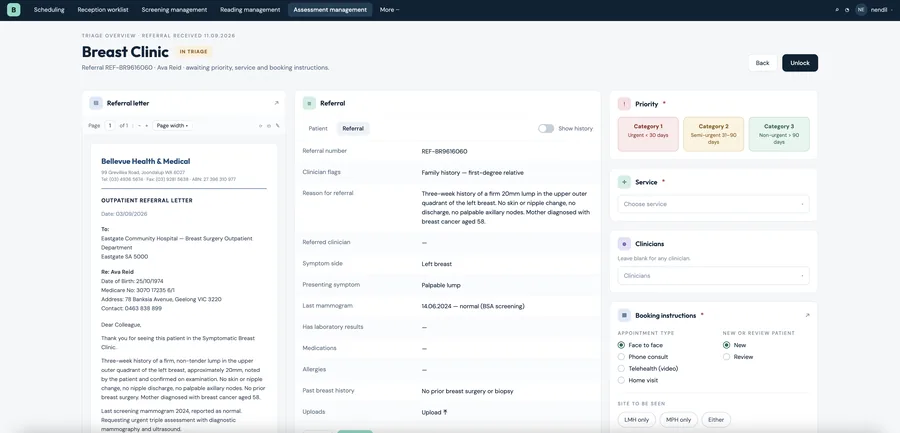
Referral & eligibility
Population screening invitations, GP referrals and self-referrals for symptomatic patients all enter the same record, with configurable eligibility and risk rules.
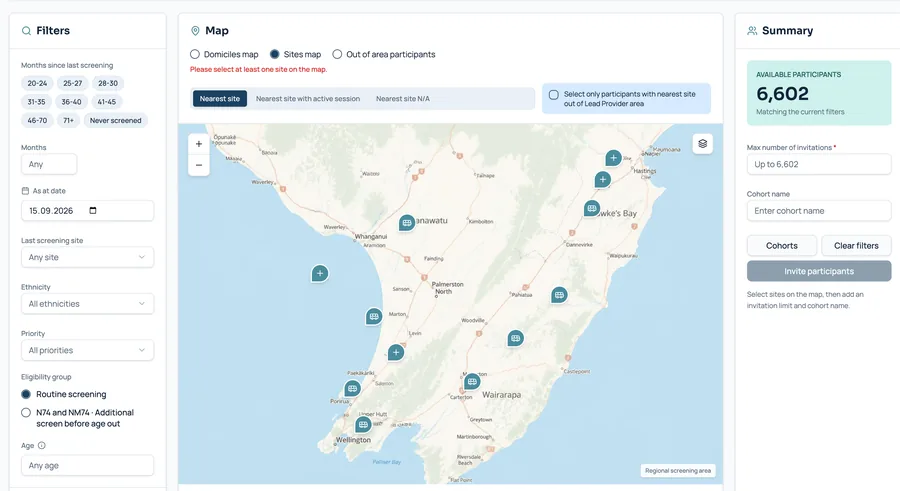
Screening & diagnostic imaging
Mammography, tomosynthesis, ultrasound and MRI scheduling across fixed and mobile sites, with direct integration to PACS, RIS and reporting worklists - including AI reading tools used as a first, second or third reader.
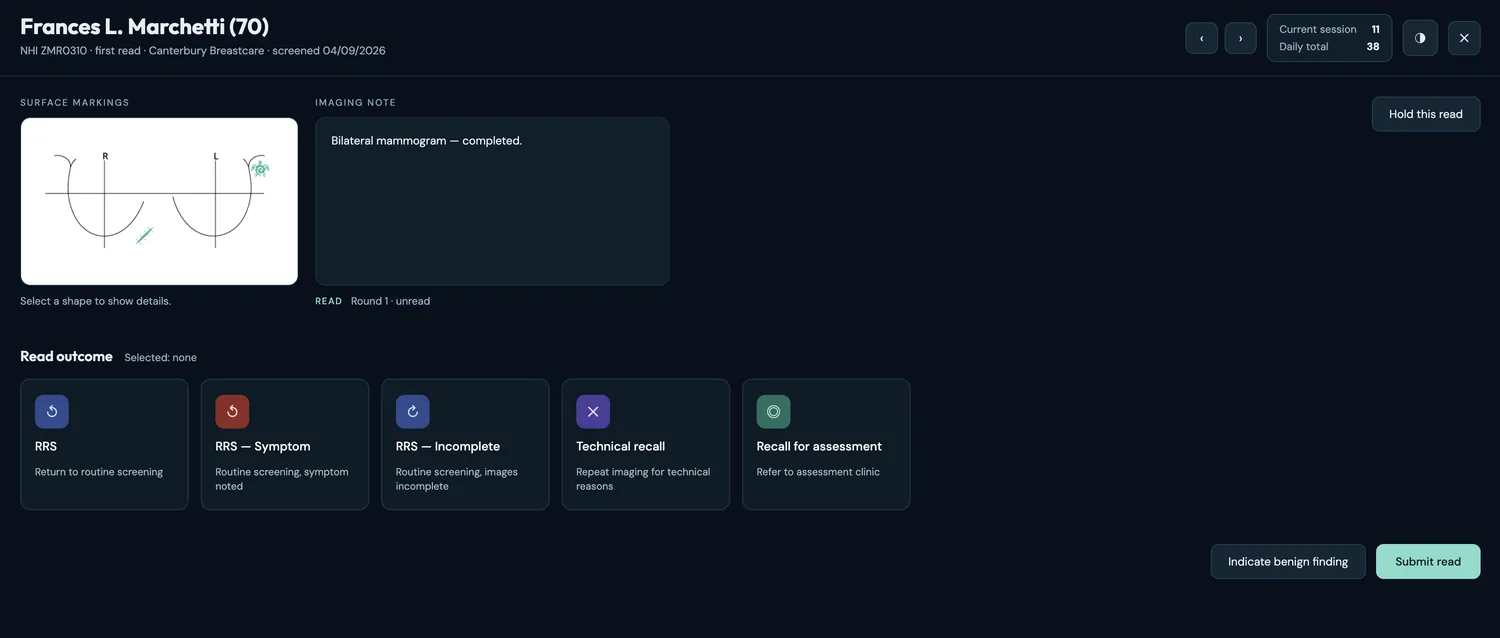
Assessment & MDT
Recall management, biopsy tracking and multidisciplinary meeting tools bring radiology, pathology and surgery into one discussion, on one record.
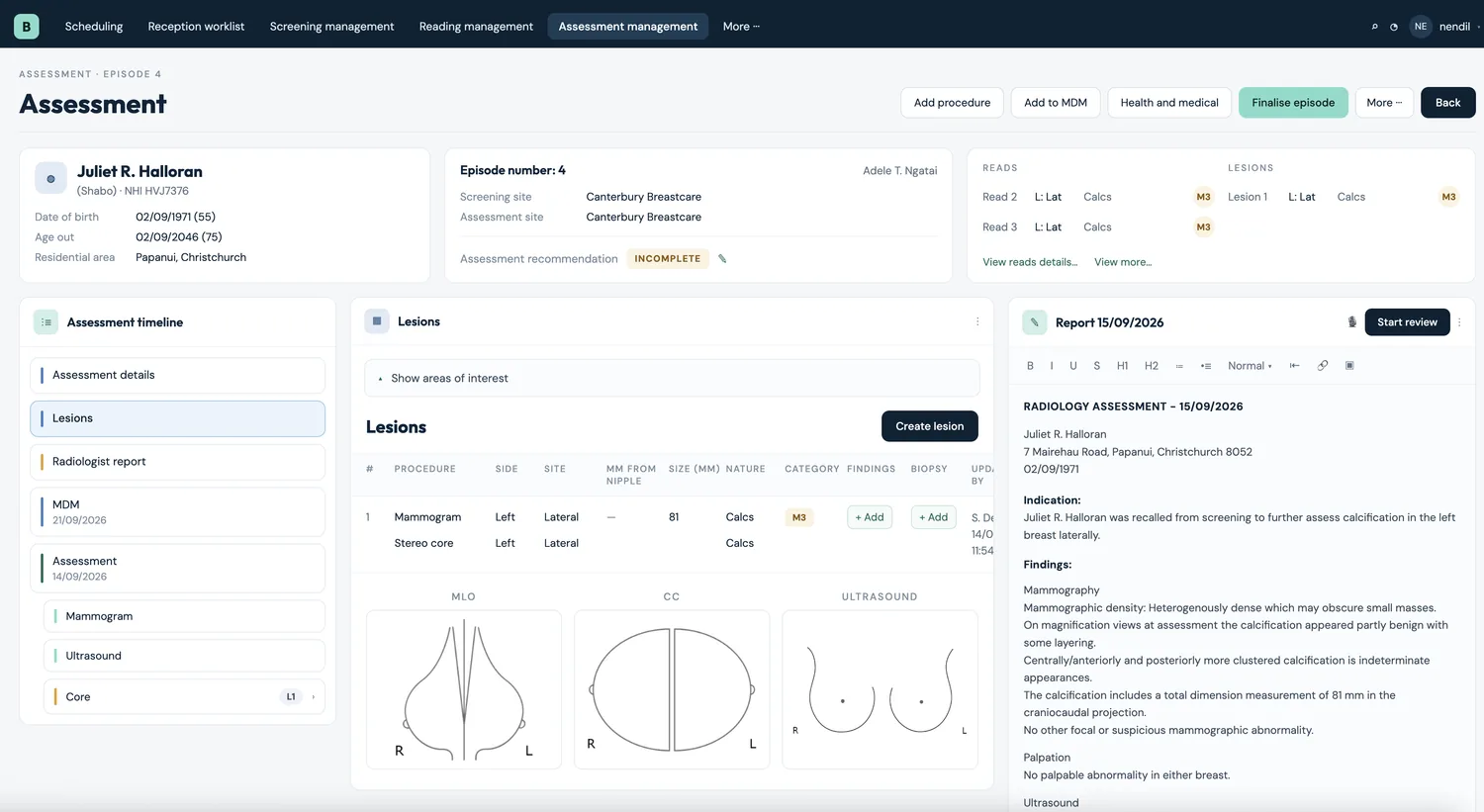
Treatment coordination
Care plans and referrals into surgery, oncology and allied services carry full clinical context - nothing is re-explained at the next hand-off.
Follow-up & surveillance
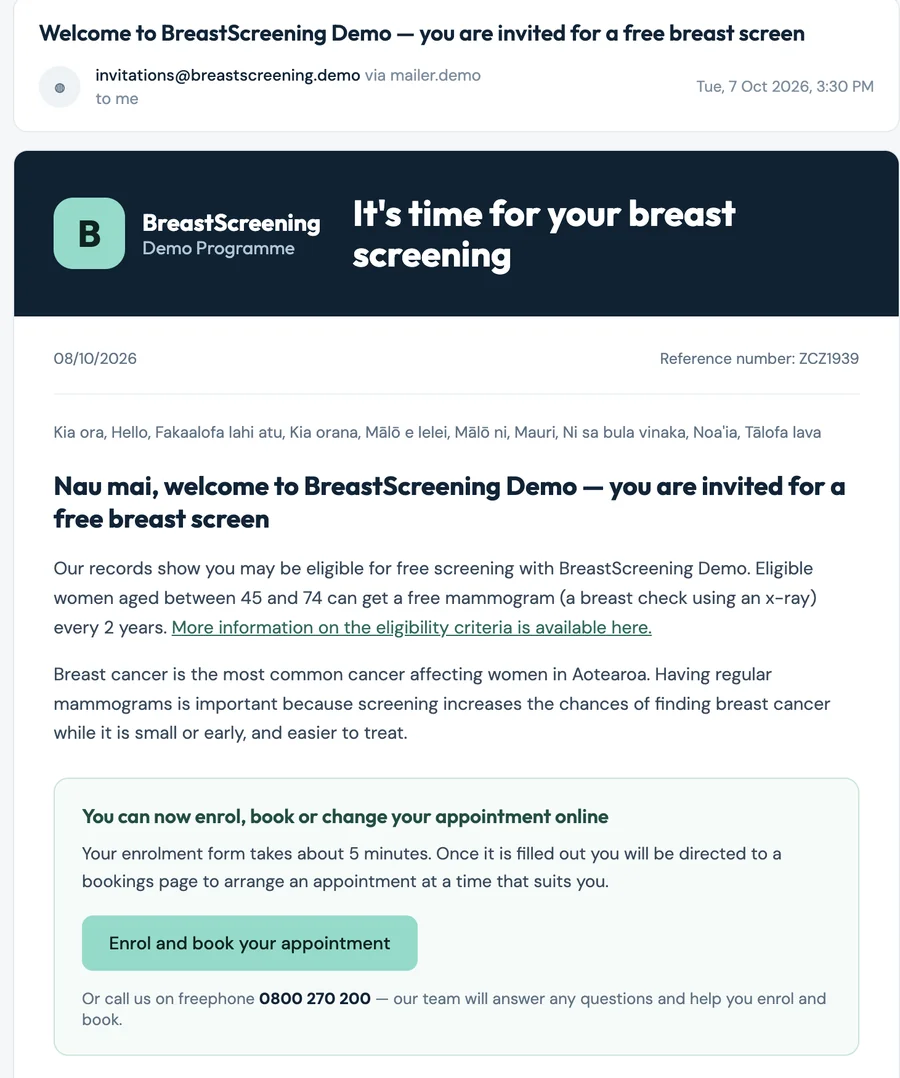
Risk-based recall schedules and automated reminders keep every patient in view, for as long as the programme needs to see them.
Reporting embedded into your RIS and PACS
Reporting shouldn’t be a separate system sitting alongside the RIS and PACS. With Pinga®, reporting is embedded directly into the workflow - bringing images, structured findings, voice recognition and reporting together in one place.
Structured findings captured in the PACS flow automatically into the report, reducing duplicate entry and ensuring the final report reflects the information already captured during image interpretation.
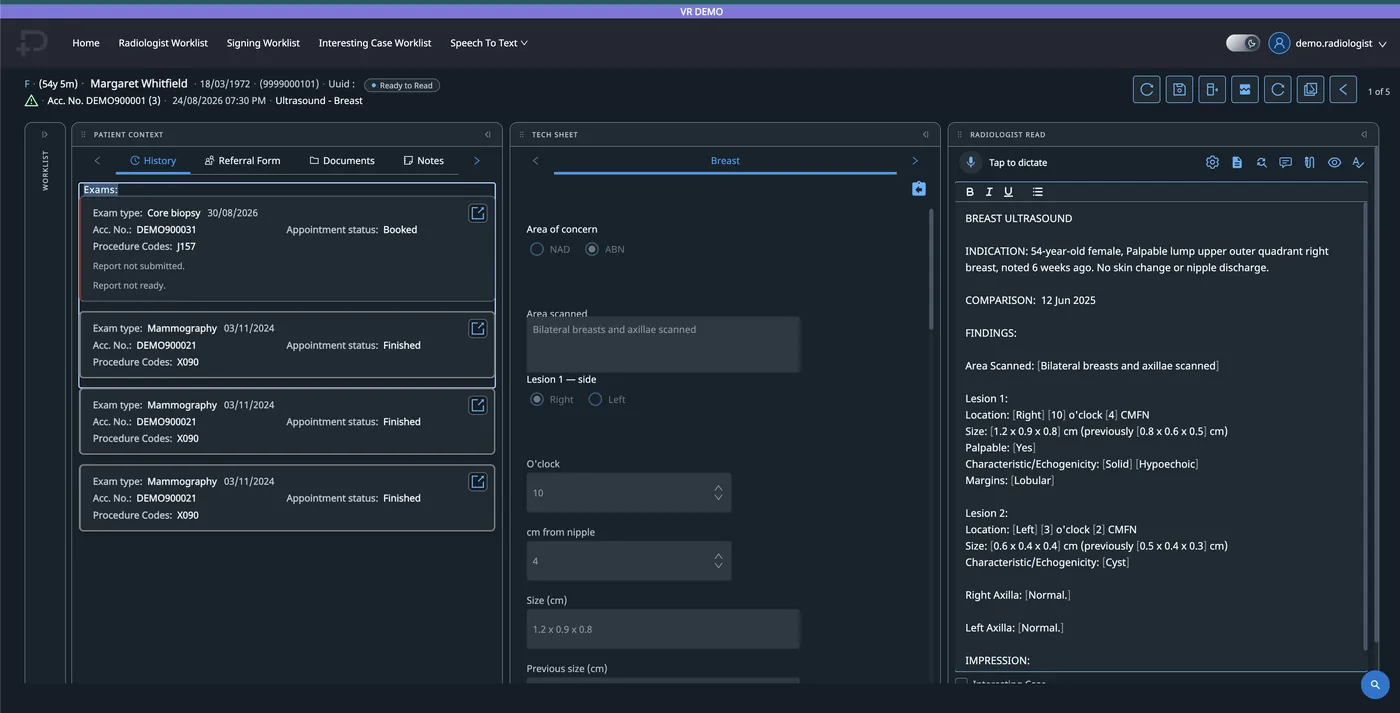
Embedded reporting in the RIS & PACS
Report directly within the RIS/PACS workflow, without switching between systems or managing a separate reporting platform. Voice recognition is built into the reporting experience, making dictation part of the same workflow.
PACS structured reporting, automatically connected
Structured findings captured in the PACS are automatically transferred into the report. Findings don’t need to be retyped or manually reconciled - the report is populated as the radiologist works.
Individual or departmental templates
Every radiologist can report using their preferred reporting model, while departments can maintain shared templates and standards. Templates can be configured by radiologist, modality or case.
Personal and shared keywords
Configure trigger keywords for individual radiologists or centrally for the department. Personal and shared keywords can work together, giving radiologists flexibility without losing consistency.
Personal or shared rules
Radiologists can apply their own reporting rules and preferences while still working within a departmental baseline. Individual overrides provide flexibility where clinical practice requires it.
Macros & pick lists
Personal or global macros and pick lists make common phrases and structured options quick to insert - improving reporting speed without forcing every radiologist into the same reporting style.
One connected reporting workflow
From image interpretation and structured findings in the PACS to voice-enabled reporting in the RIS, Pinga® connects the entire process. Capture once, populate automatically, and report your way.
A portal patients actually want to open
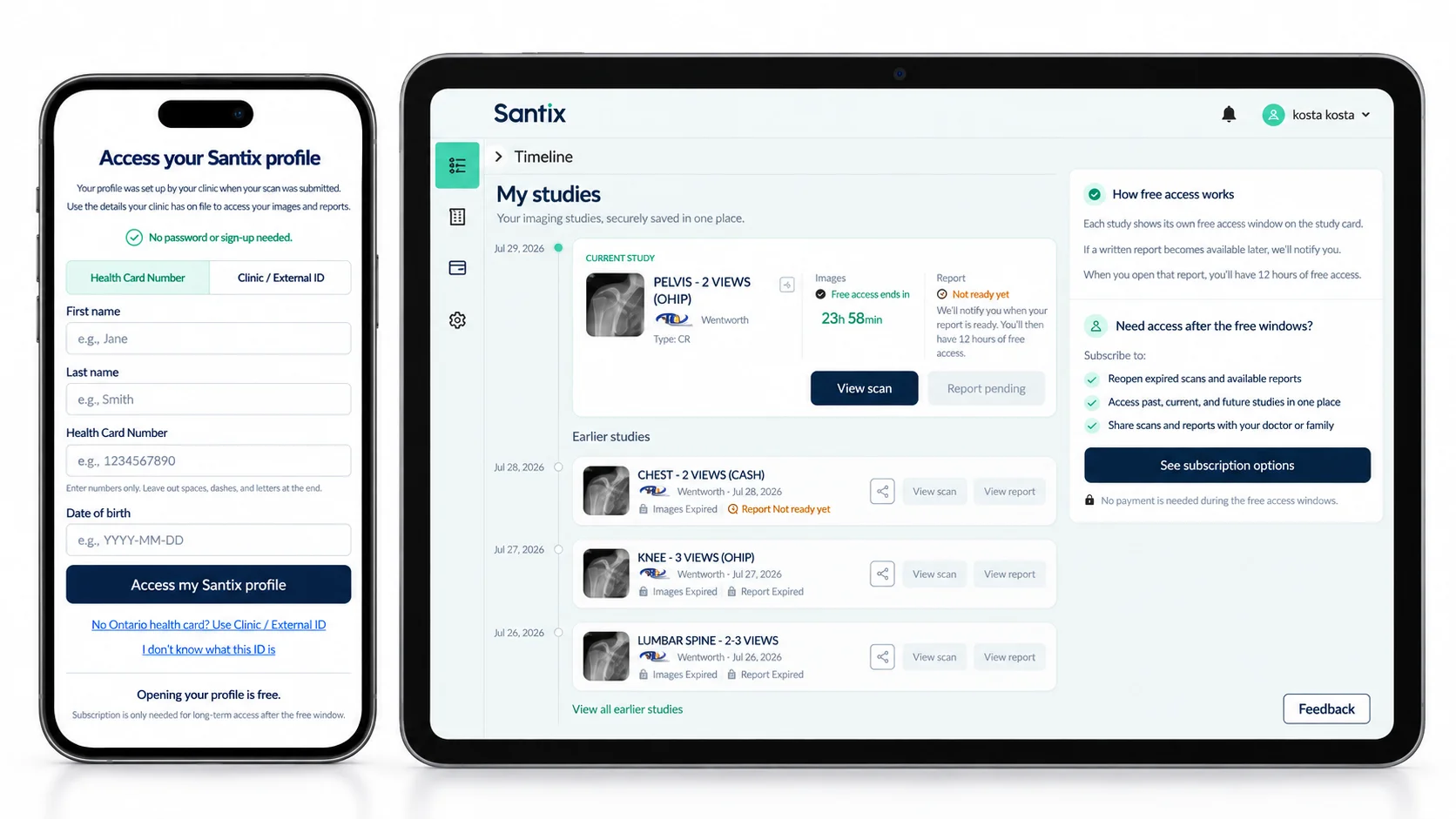
Santix, Pinga®’s patient portal, gives every participant secure, on-demand access to their own screening and diagnostic history - so they arrive at their next appointment informed, not anxious, and stop calling the clinic to ask what happened last time.
Every study, on one timeline
Images and reports land on the same timeline as soon as they’re ready, so participants always know what’s new and what’s still pending.
No account to create
Patients verify with what their clinic already has on file - a health card number, or a clinic ID and date of birth. No password, no sign-up screen, no forgotten login.
A clear free window, with simple next steps
Every study opens free for a set window. After that, keeping access is one clear choice, not a paywall surprise - and help is always one click away.
Bring your own AI reader. Pinga® provides governance.
Pinga® integrates with AI breast reading solutions as a first, second, or third reader - however your programme wants to use it - and gives you a governance layer to track, evaluate and audit every AI read alongside your radiologists’.
AI triages the worklist
AI pre-reads every case and prioritises the worklist by likelihood of pathology, so radiologists open the cases that need them first.
AI reads alongside your radiologist
AI reads as the second of a double read, flagging discordant cases into the MDT for arbitration - the same workflow your programme already runs.
AI arbitrates discordant reads
Where two human readers disagree, AI provides a third opinion - reducing the load on recall and consensus meetings.

Governance, built in
Adding an AI reader shouldn’t mean losing visibility into what it’s doing. Every AI read is a governed part of the pathway, not a black box.
Vendor-agnostic integration
Connect the AI reading tools your programme already trusts - Pinga® doesn’t lock you into a single vendor.
Full audit trail per read
Every AI and human read is logged against the same case, with scores, timing and reader role, in one immutable trail.
Performance & concordance tracking
Monitor AI-versus-human agreement, sensitivity and specificity, and watch for drift - at reader and programme level.
Regulatory & QA reporting
Export governance data straight into clinical audit, quality assurance and regulatory reporting workflows.
Why breast care teams choose Pinga®
A healthcare-grade platform, proven at national scale, designed around the people who actually run a breast care programme.
One patient record, start to finish
Screening, diagnostic imaging, MDT and treatment all reference the same participant record - nobody works from a partial picture.
Native PACS, RIS, LIS & HIS integration
Pinga® connects directly to imaging and hospital systems, so results and reports flow without re-entry.
AI-assisted, accent-aware dictation
Domain-specific speech-to-text reporting for radiologists, tuned for breast imaging terminology.
Role-based worklists
Radiographers, radiologists, breast physicians and coordinators each see exactly the work that’s theirs.
Mobile & multi-site ready
Fixed clinics, mobile units and rural stopping sites are scheduled and staffed from the same platform.
Full audit trail, one-click reporting
Every action is logged. Quality, legislative and programme reporting is built in, not bolted on.
A single national screening system for BreastScreen Aotearoa
BreastScreen Aotearoa engaged Sorsix to replace its aging and fragmented IT solution with a solution designed specifically for breast screening, while integrating into existing Health New Zealand technology. Sorsix is implementing the Pinga® SaaS platform to provide a single-stop solution supporting participant management, results management, correspondence, records management, workflow management and reporting.

Let’s talk breast care, one‑to‑one
We’re at EUSOBI 2026 in Maastricht, 1–3 October, to show how Pinga® runs an entire breast care programme - screening, imaging, MDT, treatment and follow-up - on one platform. Bring your team, bring your current setup, and we’ll walk through where a connected pathway would help most.
Not able to meet us at EUSOBI 2026?
- Meeting
- EUSOBI Annual Scientific Meeting 2026
- Dates
- 1–3 October 2026
- Location
- MECC, Maastricht, The Netherlands
- Booth
- M01